17.01.25
Research on padel injuries
Padel is a fantastic and fun sport that is gaining more and more popularity worldwide. However, like any other physical activity, padel can also carry the risk of injury. It is important to be aware of these potential injuries and know how to prevent and treat them.
Loads during padel tennis
The research shows a large variation in padel injuries distributed across both arms and legs, with elbows, knees and shoulders being at the high end. This shows that padel is a sport where the whole body is stressed and thus there are also different injury patterns depending on the player, from recreational to elite (Source: Springer).
Research on padel injuries
Research on padel injuries shows that certain types of injuries have a higher incidence among players due to the specific movement patterns and demands of the sport. Here is an overview of the most common padel injuries based on available research findings:
1. Muscle and tendon injuries
Jumper’s knee (Patellar tendinitis)
Description: Jumper’s knee is an overuse injury that affects the tendon that connects the kneecap to the shinbone.
Occurrence: Jumper’s knee is common due to the many jumps and quick changes of direction in padel.
Tennis elbow (Lateral epicondylitis)
Description: Tennis elbow is an inflammatory condition of the tendons on the outside of the elbow.
Occurrence: Occurs frequently due to repetitive hitting movements, especially backhand hits.
Rotator cuff injuries
Description: These injuries affect the muscles and tendons that stabilize the shoulder.
Occurrence: Common in padel players due to the repetitive overhead strokes and serves.
2. Joint and ligament injuries
Ankle sprains
Description: Occurs when the ligaments in the ankle are stretched or torn.
Occurrence: Very common due to the sudden changes in direction and jumps.
Knee injuries
Description: Includes injuries to ligaments, meniscus and jumper’s knee.
Occurrence: Often occurs due to the explosive movements and twists that put pressure on the knee joints.
3. Back and lower back pain
Low back pain
Description: Pain in the lower back due to muscular overload or poor technique.
Occurrence: Common due to the constant rotation and bending of the spine during play.
4. Injuries associated with overload
Achilles tendonitis
Description: Inflammation of the Achilles tendon, often caused by repetitive stress and strain.
Occurrence: May occur due to the many explosive movements and jumps.
Padel and motor skills
When playing padel, the technical process from seeing the ball to executing the stroke is a complex and coordinated series of actions involving both senses and motor skills. It places great demands on the entire body and therefore we also see a wide variety of problems in padel players.
Here is a step-by-step walkthrough of what happens in this process:
Visual perception
- Identification: The first step is to see the ball with your eyes. This involves identifying the location and direction of the ball in relation to the player’s position on the field.
- Focus: The player focuses on the ball, which involves using the central field of vision to achieve a clear and detailed perception of the ball’s movement.
Perception analysis
- Distance and Speed: The player analyzes the distance, speed, and trajectory of the ball. This helps predict where the ball will land and how quickly it will reach the player or whether it will hit the glass and you can take the ball afterwards.
- Direction and spin: The player also notes the direction of the ball and any spin, which can affect how the ball will behave upon contact with the bat and court or if it hits the glass.
Decision-making
- Shot selection: Based on the analysis of the ball’s trajectory, speed and spin, the player makes a quick decision on which shot to execute (e.g. bandeja, vibora, volley, lob, etc.).
- Positioning: The player also determines where they should position themselves on the course to optimally execute the chosen shot.
Motor planning
- Movement plan: The brain plans the movement needed to reach the ball. This involves activating the relevant muscles and coordinating the body’s movements.
- Preparation: The player begins to prepare the body by assuming the correct position, rotating the shoulders and raising the bat.
Execution of movement
- Footwork: The player moves quickly and accurately towards the ball using efficient footwork to ensure they are in the right position to hit the ball. This requires the feet, knees and hips. You may need to spin around if the ball goes into the glass, this requires our sense of balance.
- Swing: The player executes the swing using the entire body. This includes pivoting the hips, transferring weight from the back foot to the front foot, weight bearing through the knees, rotation through the upper body, and coordinating the arm movement with the rest of the body to achieve smooth and powerful contact with the ball.
- Point of contact: The precise moment the bat meets the ball is crucial. The player focuses on hitting the ball with the right part of the bat (the sweet spot) to achieve the desired control and power. If the ball does not hit the sweet spot, more vibration and thus strain will be transmitted through the bat to the hand, forearm and shoulder.
Subsequent action
- Follow Through: After hitting the ball, the player naturally follows through with the stroke to ensure that the energy is transferred effectively to the ball.
- Positioning: The player then quickly moves back to a neutral position on the course, ready for the next shot.
This process occurs in fractions of a second and requires a high degree of coordination, precision and experience. It places great demands on the entire body but also the body’s senses to perform the movements.
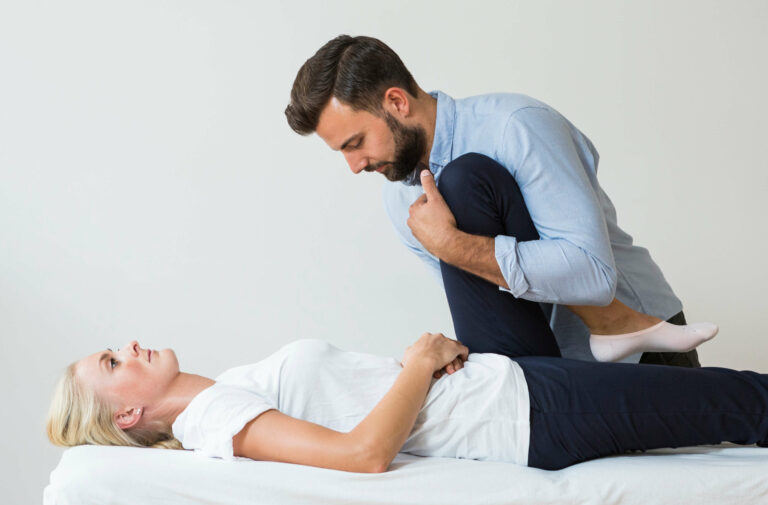
Osteopathy and paddle injuries
Osteopathy can be an effective approach to treating and preventing paddle injuries.
Osteopathy is a holistic approach to health and well-being that focuses on identifying and treating the causes of pain and discomfort in the body.
When it comes to paddle injuries, osteopathy can be an effective treatment method that not only relieves pain, but also finds the underlying causes of the problem and helps prevent recurrence of injuries.
Osteopathy can i.a. be useful for the following:
Pain relief
Osteopathic techniques, such as manipulation and mobilization of joints and muscles, can help relieve pain and reduce inflammation in areas affected by injuries such as tennis elbow, shoulder injuries, or knee problems.
Improved mobility
Osteopathy aims to restore optimal movement and function in the body. By releasing dysfunctions in the body, osteopathy can help padel players maintain flexibility and mobility in joints and muscles, which can reduce the risk of injury and improve performance on the court.
Identification of underlying causes
An important part of osteopathic treatment is identifying and treating underlying causes of injuries. This may include biomechanical dysfunctions, poor posture or muscular imbalances that may contribute to the development of injuries such as jumper’s knee or shoulder impingement.
Prevention
In addition to treating existing injuries, osteopathy can also be used to prevent injuries by identifying and correcting potential risk factors, such as muscular imbalances or poor movement patterns, before they develop into problems and injuries.
Functional Training
In addition to manual therapy, osteopaths can also offer functional training and exercise programs aimed at strengthening weak muscles, improving body stability, and increasing mobility in affected areas. This can help restore optimal function throughout the body and reduce the risk of future injuries.
Holistic approach
One of the benefits of osteopathy is its holistic approach to health and well-being. Osteopaths can also provide advice on lifestyle factors that can affect health and performance on the pitch, including nutrition, sleep, stress management and other lifestyle factors. A holistic approach to health and well-being can help promote overall well-being and improve performance on the pitch.
In combination with proper warm-up, strength training, technical training and recovery, osteopathy can be a good partner for the padel player. Overall, osteopathy can be a valuable resource for padel players who want to treat and prevent injuries, improve their performance and promote long-term health and well-being on and off the court. It is important to have a good collaboration with the padel player so that a tailored treatment plan can be developed that suits the player’s individual needs and goals.
Use the right equipment
Bat: A proper bat will help reduce the strain on the hand, elbow and shoulder. The more top-heavy the bat, the greater the strain it requires on the muscles. Many bats also have “anti-vibration” technology in the bat, which reduces the vibration in the muscle and tendons and thus reduces the strain on the tissue. In addition, a larger “sweet spot” can also reduce the strain through the arm.
Shoes: Correct padel shoes will help reduce the risk of trauma injuries around the feet, knees and hips. Padel shoes have a special pattern under the shoe that makes it more slip-resistant when changing direction on the court, where regular running shoes have a different pattern that provides more for running.
Exercise equipment: An essential tool in any home workout routine is resistance bands. These versatile tools are great for targeting specific muscle groups and can be easily adjusted to different strength levels.