We treat
Hypermobility
Learn more about hypermobility and its complications
Hypermobility means that your joints can move through a greater range than usual. For many people, this causes no problems, but others may experience joint pain, stiffness, muscle fatigue or a feeling of instability.
When hypermobility causes ongoing symptoms, it may be associated with Hypermobility Spectrum Disorder (HSD) or, in some cases, hypermobile Ehlers-Danlos syndrome (hEDS).
In this article, you can learn more about the symptoms and causes of hypermobility-related problems, how to manage them and how osteopathy may form part of a wider treatment approach.
Hypermobile? Book an appointment.



Jump to section [Show]
What is hypermobility?
Joint hypermobility describes joints that can move through a greater range than usual. It can affect one or several joints, or occur throughout the body (2).
Hypermobility is common and does not automatically mean that something is wrong. For some people, it causes no symptoms at all. For others, it can be associated with pain, stiffness, muscle fatigue or a feeling of instability. (1,2)
When joint hypermobility is associated with ongoing symptoms and other possible causes have been considered, it may be diagnosed as Hypermobility Spectrum Disorder (HSD). Hypermobile Ehlers-Danlos syndrome (hEDS) is a separate condition with specific diagnostic criteria (1,3).
It is therefore possible to be hypermobile without having HSD or hEDS.

Why can you feel tight if you are hypermobile?
It may seem strange to feel tight and stiff when your joints are very flexible. This can happen because the muscles around your joints may need to work harder to control and support your movement, leaving them feeling tense, tired or achy (1,4).
Some people with hypermobility may also have differences in proprioception – your body’s awareness of where your joints are positioned. Research suggests that proprioception may be altered in some people with joint hypermobility, although findings are not completely consistent (6).
Developing strength, balance and movement control can therefore be particularly helpful. Stress, sleep, activity levels and recovery can also influence how your body responds to pain and physical demands.
For this reason, the aim is often not to increase flexibility, but to build strength, stability and control within the range of movement you already have (4,5).
What are the symptoms of hypermobility?
Symptoms vary considerably between individuals. Some people experience only mild symptoms, while others may find that hypermobility affects exercise, work, sleep or everyday activities (3,5).
Common symptoms can include:
- Joint or muscle pain
- Muscle fatigue or aching
- Joint stiffness
- A feeling of joint instability
- Recurrent sprains or soft-tissue injuries
- Recurrent subluxations or dislocations in some individuals
- Reduced confidence with movement
- Difficulty tolerating prolonged physical activity
- Fatigue (3,5)
Some people with HSD or hEDS also experience symptoms outside the musculoskeletal system, such as gastrointestinal or autonomic symptoms. These can be complex and may have several contributing factors, so they should be assessed individually rather than automatically attributed to hypermobility (3,7,8).
Can osteopathy help with hypermobility?
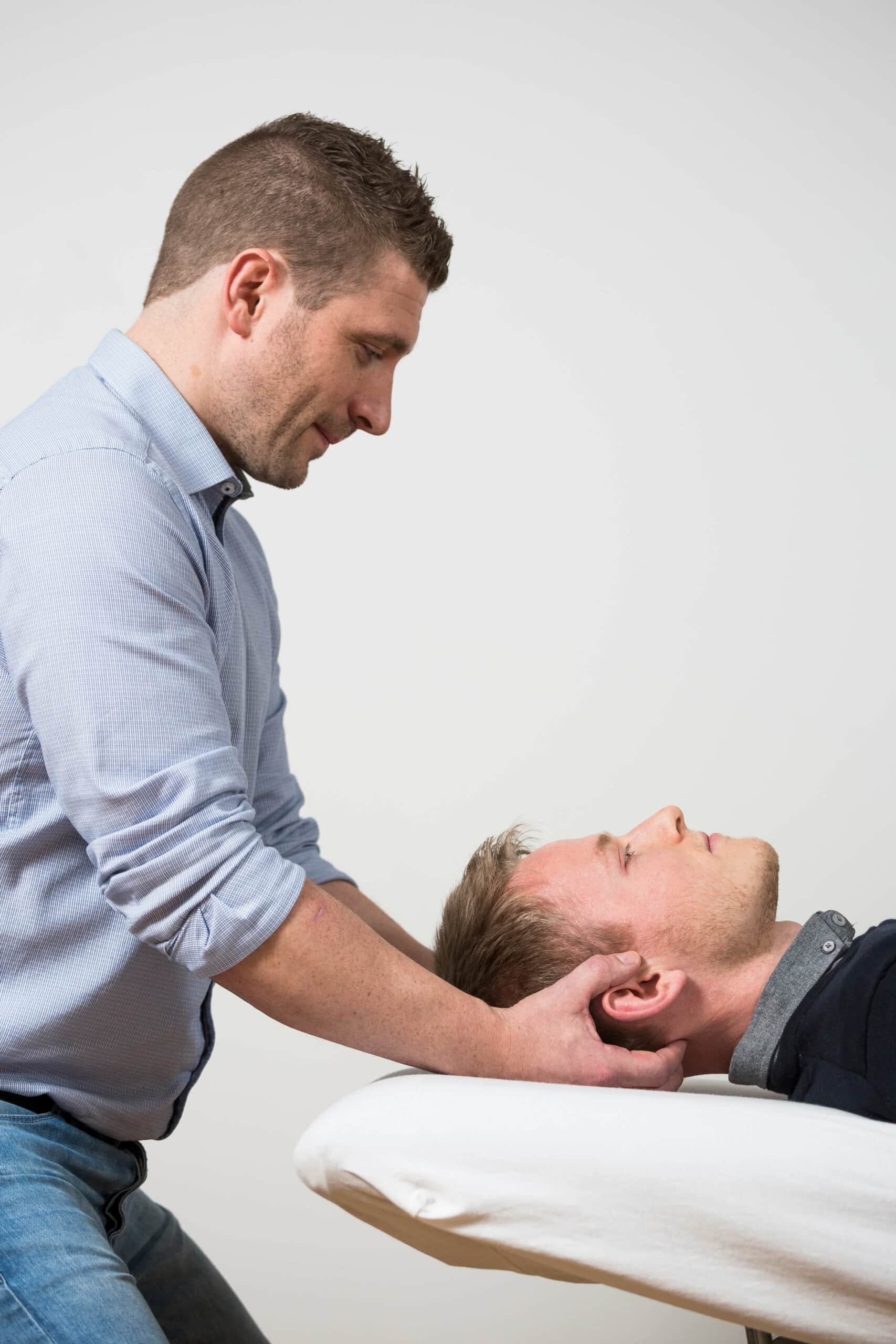
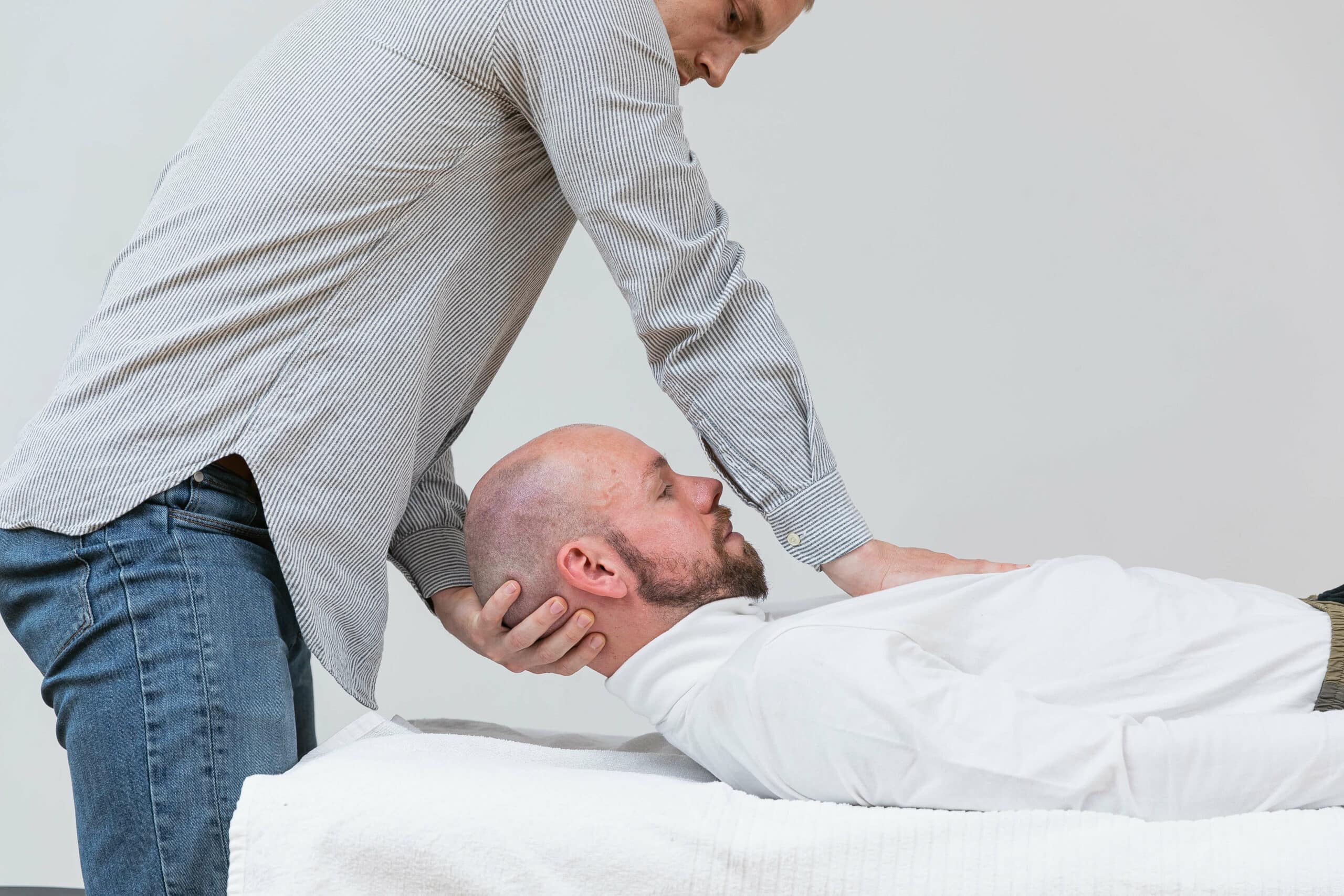
Osteopathy may form part of a broader management and rehabilitation plan for people experiencing musculoskeletal symptoms associated with hypermobility.
An osteopath will look beyond the painful joint, considering how different areas of the body move and function together, as well as factors such as your activity levels, work, sleep, stress and recovery.
Depending on your individual needs, treatment may include appropriate hands-on techniques alongside exercise and self-management advice. Hands-on treatment may provide short-term relief for some people, but it does not correct or cure hypermobility (9,10).
A whole-body approach may consider:
Movement and joint control: Helping you develop strength and control without repeatedly pushing into end-range positions.
Muscle tension: Using appropriate hands-on techniques to help manage areas of muscular tension and discomfort.
Breathing and relaxation: Considering breathing patterns and using gentle techniques that may help promote relaxation and reduce physical tension.
Activity and load management: Adapting exercise, work and daily activities to match your current capacity, with gradual progression over time (4,5).
Sleep, stress and recovery: Recognising that these factors can influence pain, fatigue and your ability to recover.
The aim is not to “fix” hypermobility, but to help you understand your body, build physical capacity and feel more confident with movement.
A holistic approach means considering the different factors that may be contributing to your symptoms, rather than assuming that every symptom is caused by hypermobility.
What can you do yourself?
There are several practical ways you can support your joints and manage symptoms:
Build strength gradually
Regular resistance exercise can help improve muscle capacity and movement control and is an important part of rehabilitation for symptomatic hypermobility (4,5).
Avoid habitual end-range positions
You do not need to constantly brace your joints, but it may be helpful to avoid spending long periods in positions where you rely heavily on passive joint structures, such as repeatedly locking your knees backwards while standing (5).
Change position regularly
There is no single perfect posture. Moving regularly and varying your positions can be more useful than trying to maintain one “ideal” position all day.
Pace your activity
Try to avoid doing significantly more activity than your body is currently accustomed to, even when you are having a particularly good day. Gradual and consistent progression can help build physical capacity. (4,5)
Prioritise recovery
Adequate sleep, nutrition and hydration support general health and your ability to recover from physical demands.
Focus on what your body can do
Hypermobility does not mean that you need to avoid exercise. With appropriate progression, many people can build their strength and tolerance for activities they enjoy (4,5).
Should you stretch if you are hypermobile?
If you are already naturally flexible, increasing your range of movement may not always be the main goal. Rehabilitation approaches for symptomatic hypermobility generally place greater emphasis on strengthening, movement control and functional stability (4,5).
Prioritise stability over range: Rather than repeatedly pushing joints towards their end range, focus on developing strength and control within a comfortable range.
Mid-range movement: Active, controlled mobility may be more appropriate than repeatedly using passive stretching to increase an already large range of movement.
Release without overstretching: If muscles feel constantly tight, gentle movement, breathing techniques, heat or appropriate soft-tissue work may help manage discomfort without continually increasing joint range.
Pacing, recovery and managing flare-ups
Symptoms can sometimes temporarily increase following increased activity, illness, stress, poor sleep or other changes in your usual routine.
During a flare-up, consider
Avoid the boom-bust cycle: Try not to push to exhaustion on high-energy days and then significantly reduce activity afterwards. Instead, aim for steady, consistent and manageable levels of activity.
Manage flare-ups proactively: During a flare-up, complete rest is not always necessary. Depending on your symptoms, reducing the intensity or duration of activity and maintaining gentle movement may be more appropriate (5).
Monitor your 24-48-hour response: Pay attention to how your body responds during and after activity. If symptoms remain significantly increased, adjust the intensity or volume of your next session and build back gradually (4,5).
Everyday habits for joint care
Avoid habitually locking your joints: Try not to spend long periods locking your knees backwards when standing or your elbows when leaning. Vary your position and use your muscles to support movement comfortably.
Vary your posture: Change positions regularly throughout the day. Even comfortable postures can become tiring when held for long periods.
Support sleep and nutrition: Aim for a balanced diet, stay well hydrated and prioritise good sleep to support your general health and recovery.
When should you seek medical advice for hypermobility?
Speak to your GP or another appropriate healthcare professional if you experience:
- Recurrent or unexplained joint dislocations
- Significant or worsening joint instability
- Sudden joint swelling, redness or warmth
- New or progressive weakness or numbness
- Loss of function
- Severe or unexplained dizziness or recurrent fainting
Seek urgent medical help if you experience sudden or severe weakness, a new loss of function or a joint dislocation that cannot be reduced.
Call 999 if you experience severe chest pain, sudden or severe shortness of breath, or fainting accompanied by chest pain or breathing difficulties.
These symptoms can have causes unrelated to hypermobility and should not automatically be attributed to HSD or hEDS.
Living well with hypermobility
Hypermobility is a characteristic of how your body is built and does not necessarily need to be corrected. If it causes symptoms, a combination of strength, movement control, pain management and appropriate rehabilitation can help you build confidence and physical capacity (1,4,5).
A holistic approach considers the whole person – including movement, activity, stress, sleep and recovery – rather than focusing only on the painful area. Osteopathy may form part of this approach, with hands-on treatment potentially helping to relieve pain and muscle tension alongside exercise and self-management (9,10).
Symptoms can fluctuate and progress takes time, but with appropriate support and rehabilitation, many people can continue doing the work, exercise and activities they enjoy (4,5).
The goal is not perfection – it is building strength, stability, confidence and resilience, while helping you feel more comfortable and in control of your body.
Frequently Asked Questions About Hypermobility
Is hypermobility a medical condition?
Not necessarily. Many people are naturally hypermobile and have no symptoms. When hypermobility is associated with musculoskeletal symptoms and other clinical features, it may be diagnosed as Hypermobility Spectrum Disorder (HSD) or, in some cases, hypermobile Ehlers-Danlos syndrome (hEDS) (1,2,3).
Does hypermobility cause pain?
Hypermobility can be associated with musculoskeletal pain in some individuals, but being hypermobile does not automatically mean that you will develop pain. Symptoms can be influenced by physical loading, muscle capacity, movement control and individual circumstances (3,5).
Can you exercise if you are hypermobile?
Yes. Exercise is generally an important part of managing symptomatic hypermobility. Strength and movement-control exercises can help develop physical capacity. Exercise should be introduced gradually and adapted to the individual (4,5).
Should I avoid stretching if I am hypermobile?
Not necessarily. However, if you already have a large range of movement, repeatedly stretching into your end range may not be necessary. Strengthening and controlled movement may be more useful for some people (4,5).
Can osteopathy help with hypermobility?
Osteopathy does not cure or reverse hypermobility. However, osteopathic care may form part of a broader management plan and may help some individuals manage musculoskeletal symptoms alongside exercise, rehabilitation and other appropriate healthcare. Evidence for osteopathic manual treatment relates mainly to broader musculoskeletal pain populations rather than specifically to HSD or hEDS (9,10).
Does hypermobility get worse with age?
Hypermobility can change over time. Some people notice that their flexibility decreases with age, while symptoms such as pain or stiffness may continue. How symptoms develop varies considerably between individuals (3).
Can hypermobility cause fatigue?
Fatigue is reported by some people with HSD and hEDS. However, fatigue can have many different causes, so persistent or significant fatigue should be discussed with an appropriate healthcare professional rather than automatically attributed to hypermobility (3,8).
What is the difference between HSD and hEDS?
HSD describes symptomatic joint hypermobility that does not meet the diagnostic criteria for hEDS or another condition that better explains the symptoms. hEDS is a hereditary connective tissue disorder with specific diagnostic criteria (1,3).
Can hypermobility be cured?
There is no treatment that simply removes a person’s underlying joint hypermobility. Management instead focuses on improving strength, movement control, symptom management and quality of life (1,4,5).
When should I see an osteopath?
If you are experiencing musculoskeletal pain, stiffness or movement-related problems, an osteopath may be able to assess your symptoms and discuss whether osteopathic care could form part of your management. Where symptoms require medical investigation or fall outside the scope of osteopathic care, you may be advised to see your GP or another healthcare professional.
References
- Castori M, Tinkle B, Levy H, Grahame R, Malfait F, Hakim A. A framework for the classification of joint hypermobility and related conditions. Am J Med Genet C Semin Med Genet. 2017;175(1):148-157. doi:10.1002/ajmg.c.31539.
- Malfait F, Francomano C, Byers P, Belmont J, Berglund B, Black J, et al. The 2017 international classification of the Ehlers-Danlos syndromes. Am J Med Genet C Semin Med Genet. 2017;175(1):8-26. doi:10.1002/ajmg.c.31552.
- Tinkle B, Castori M, Berglund B, Cohen H, Grahame R, Kazkaz H, et al. Hypermobile Ehlers-Danlos syndrome (a.k.a. Ehlers-Danlos syndrome Type III and Ehlers-Danlos syndrome hypermobility type): clinical description and natural history. Am J Med Genet C Semin Med Genet. 2017;175(1):48-69. doi:10.1002/ajmg.c.31538.
- Buryk-Iggers S, Mittal N, Santa Mina D, Adams SC, Englesakis M, Rachinsky M, et al. Exercise and rehabilitation in people with Ehlers-Danlos syndrome: a systematic review. Arch Rehabil Res Clin Transl. 2022;4(2):100189. doi:10.1016/j.arrct.2022.100189.
- Engelbert RHH, Juul-Kristensen B, Pacey V, de Wandele I, Smeenk S, Woinarosky N, et al. The evidence-based rationale for physical therapy treatment of children, adolescents, and adults diagnosed with joint hypermobility syndrome/hypermobile Ehlers-Danlos syndrome. Am J Med Genet C Semin Med Genet. 2017;175(1):158-167. doi:10.1002/ajmg.c.31545.
- Smith TO, Jerman E, Easton V, Bacon H, Armon K, Poland F, et al. Do people with benign joint hypermobility syndrome have reduced joint proprioception? A systematic review and meta-analysis. Rheumatol Int. 2013;33(11):2709-2716. doi:10.1007/s00296-013-2790-4.
- Fikree A, Aziz Q, Grahame R. Hypermobile Ehlers-Danlos syndrome and disorders of the gastrointestinal tract: what the gastroenterologist needs to know. Neurogastroenterol Motil. 2022;34(6). doi:10.1111/nmo.14313.
- Lacy BE, et al. AGA clinical practice update on gastrointestinal manifestations and autonomic or immune dysfunction in hypermobile Ehlers-Danlos syndrome: expert review. Clin Gastroenterol Hepatol. 2025. PMID:40387691.
- Rehman Y, Ferguson H, Bozek A, Blair J, Allison A, Johnston R. Osteopathic manual treatment for pain severity, functional improvement, and return to work in patients with chronic pain: a systematic review and meta-analysis. J Am Osteopath Assoc. 2020;120(12):888-906. doi:10.7556/jaoa.2020.128.
- Dal Farra F, Risio RG, Vismara L, Bergna A. Effectiveness of osteopathic interventions in chronic non-specific low back pain: a systematic review and meta-analysis. Complement Ther Med. 2020;53:102616. doi:10.1016/j.ctim.2020.102616.

Often related injuries

Chronic Pain

Shoulder dislocation

Sprains
Chronic fatigue

Knee pain

Lower back pain
Neck pain